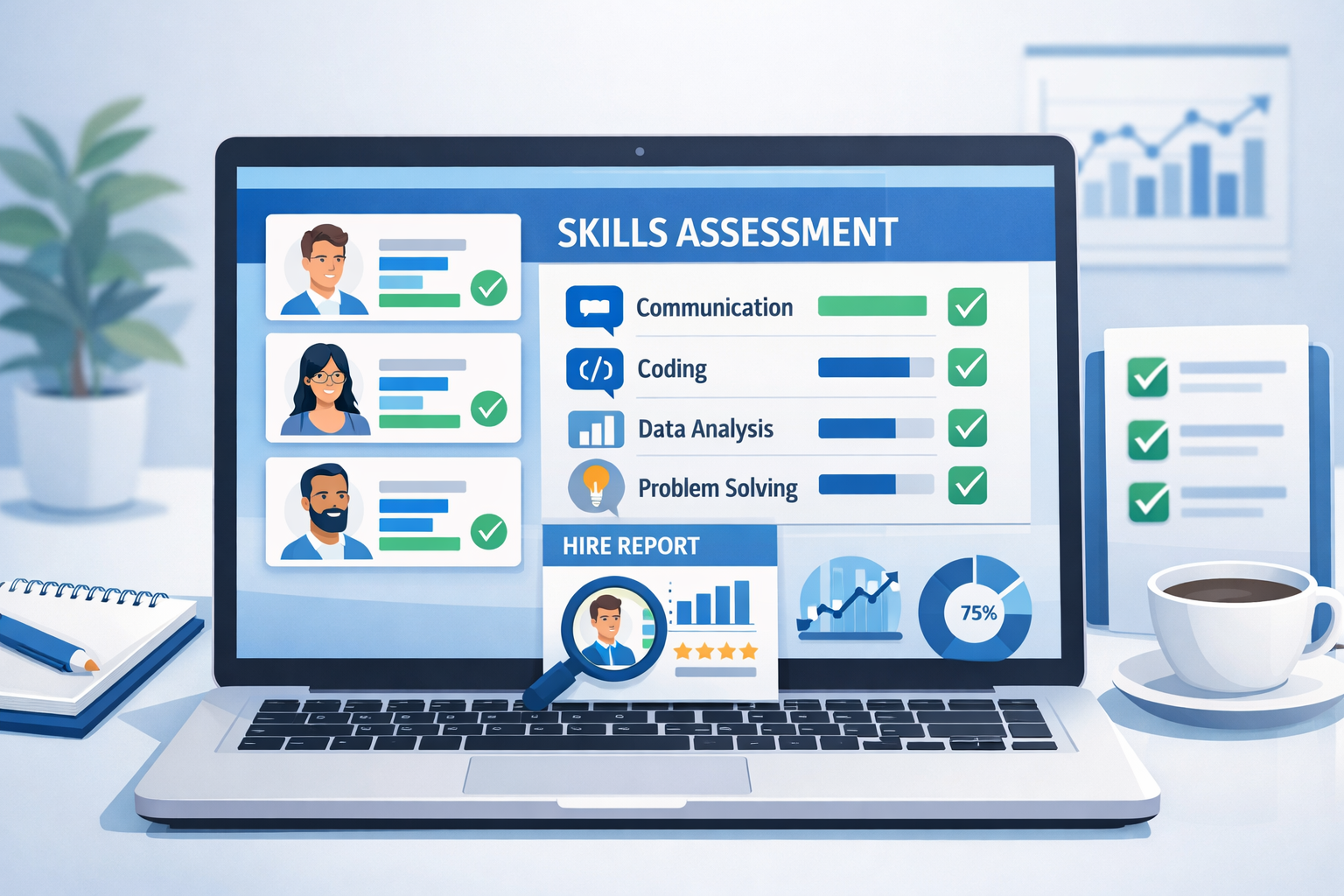
In today’s job market, many companies are rethinking how they hire. A college degree, a polished resume, or years of experience do not always prove that a person can actually do the job well. That is why skill-based hiring is becoming one of the most effective and practical recruitment strategies for modern businesses.
This article explains what skill-based hiring is, why it matters, how it works, and how employers can use it to build stronger teams. Whether you run a small business, manage HR, or want to improve your hiring process, this guide will help you understand why hiring for skills can lead to better results.
MORE RELATED ARTICLE: https://jobzcss.com/ai-resume-screening/
What Is Skill-Based Hiring?
Skill-based hiring is a recruitment approach that focuses on a candidate’s actual abilities instead of relying too heavily on traditional qualifications like degrees, job titles, or years of experience.
In simple terms, employers look at what a person can do rather than where they studied or what company names appear on their resume.
For example, if a business wants to hire a digital marketer, it may test the applicant’s ability to run campaigns, write ad copy, analyze data, or improve conversion rates. This gives a clearer picture of real-world ability than simply checking whether the candidate has a marketing degree.
Why Skill-Based Hiring Matters More Than Ever
The workplace has changed quickly over the last few years. New tools, automation, remote work, and digital transformation have made many job roles more focused on practical outcomes. At the same time, employers are facing talent shortages in many industries.
This is where skills-first recruitment becomes valuable.
When employers focus on proven skills, they can:
- Reach a wider talent pool
- Find capable candidates faster
- Reduce hiring bias
- Improve employee performance
- Lower turnover rates
- Build more adaptable teams
Many highly capable people gain skills through online courses, freelance projects, internships, bootcamps, certifications, or self-learning. Traditional hiring methods often miss these candidates.
Benefits of Skill-Based Hiring for Employers
1. Access to a Larger Talent Pool
When a company removes unnecessary degree requirements, more people can apply. This includes self-taught professionals, career changers, military veterans, freelancers, and candidates from nontraditional backgrounds.
That means employers are no longer limited to a narrow group of applicants.
2. Better Job Fit
A candidate may have impressive credentials but still struggle to perform the daily tasks of the role. Skill-based hiring reduces this risk by focusing on demonstrated ability.
This often leads to better alignment between job requirements and employee performance.
3. Faster Hiring Decisions
A clear skills assessment can make hiring easier. Instead of spending too much time comparing resumes, recruiters can quickly identify who has the required competencies.
This can improve the talent acquisition process and reduce time-to-hire.
4. Reduced Bias in Recruitment
Traditional hiring sometimes favors candidates from well-known schools, big-name employers, or specific personal backgrounds. Skill-based hiring shifts attention toward measurable performance.
This can support more fair and inclusive hiring decisions.
5. Improved Retention
When people are hired because they can truly perform the work, they are often more confident, productive, and satisfied in the role. This can help businesses reduce employee turnover and improve long-term retention.
Common High-Value Skills Employers Look For
The exact skills vary by industry, but some are consistently in demand across many sectors. These include both technical and soft skills.
Technical Skills
- Data analysis
- Digital marketing
- SEO and content writing
- Software development
- Graphic design
- Project management
- CRM management
- Financial analysis
- Cybersecurity
- Cloud computing
Soft Skills
- Communication
- Problem-solving
- Leadership
- Adaptability
- Time management
- Teamwork
- Critical thinking
- Customer service
In many cases, companies now combine both categories when evaluating candidates.
Skill-Based Hiring vs Traditional Hiring
To understand the value of this approach, it helps to compare it with older hiring methods.
Traditional Hiring Often Focuses On:
- College degrees
- Years of experience
- Previous job titles
- Industry prestige
- Resume keywords
Skill-Based Hiring Focuses On:
- Practical ability
- Job-related tests
- Portfolio quality
- Real-world problem solving
- Demonstrated competencies
This does not mean education and experience have no value. They still matter in many roles. But they should not be the only filters used when making hiring decisions.
How Skill-Based Hiring Works
A successful skills-based recruitment strategy usually follows a practical structure.
Step 1: Define the Skills Needed for the Role
Start by identifying the exact skills that matter most. Separate “must-have” skills from “nice-to-have” skills.
For example, for a content strategist role, must-have skills may include:
- Keyword research
- Content planning
- SEO writing
- Analytics reporting
Nice-to-have skills may include:
- Basic design experience
- Video scripting
- Email marketing
This makes the hiring process more targeted and realistic.
Step 2: Rewrite Job Descriptions
Job descriptions should focus on outcomes and abilities, not just credentials.
Instead of saying:
“Bachelor’s degree required with 5 years of experience.”
You can say:
“Ability to manage campaigns, analyze performance data, and improve lead generation through digital channels.”
This attracts candidates who can do the work, even if they come from a different path.
Step 3: Use Skills Assessments
Assessments are one of the most powerful parts of skill-based hiring. These may include:
- Practical tests
- Job simulations
- Writing samples
- Coding tasks
- Case studies
- Portfolio reviews
A short, relevant assessment often reveals more than multiple interview rounds.
Step 4: Structure Interviews Around Skills
Ask candidates to explain how they solved real problems in past projects. Use scenario-based questions that connect directly to the role.
Examples include:
- “How would you improve a low-performing ad campaign?”
- “Tell me about a time you solved a difficult client issue.”
- “How do you prioritize tasks under pressure?”
This gives employers more meaningful hiring data.
Step 5: Score Candidates Fairly
Use a clear scoring system for skills, communication, and task performance. This creates a more consistent process and reduces personal bias.
Best Practices for Skill-Based Hiring
Companies that want better results should follow a few core best practices.
Focus on Essential Skills Only
Avoid adding too many requirements to the job description. Long lists often discourage good candidates from applying.
Keep Assessments Relevant
Tests should reflect real tasks from the job. They should be practical, fair, and not overly time-consuming.
Value Transferable Skills
A person may not have direct industry experience, but they may still bring strong problem-solving, communication, or leadership skills that transfer well.
Train Hiring Managers
Managers should understand how to evaluate candidates based on competencies instead of relying only on resume patterns.
Review Results Regularly
Track employee performance and retention after hiring. This helps improve your recruitment process over time.
Industries Where Skill-Based Hiring Works Well
Skill-based hiring is growing across many industries, especially in roles where practical ability matters more than formal credentials.
Technology
Software developers, UX designers, data analysts, and IT support professionals are often hired based on portfolios, coding tasks, and technical assessments.
Marketing
Digital marketing, SEO, paid advertising, content writing, and social media roles are ideal for skills-first hiring because performance can be measured clearly.
Customer Service
Communication, problem-solving, patience, and product knowledge are often more important than formal education in these roles.
Sales
Strong sales ability depends heavily on communication, persuasion, relationship building, and follow-up skills.
Healthcare Support and Administration
Some healthcare roles require licenses, but many support functions benefit from skill-based evaluation, especially in communication, systems handling, and patient coordination.
Challenges of Skill-Based Hiring
Like any hiring method, this approach also comes with challenges.
It Takes Planning
Companies need to define job-relevant skills clearly. Without that, assessments can become vague or ineffective.
Not Every Skill Is Easy to Test
Some abilities, especially leadership or creativity, can be harder to measure accurately in a short hiring process.
Hiring Teams May Resist Change
Some recruiters and managers are used to screening resumes by degree or years of experience. Moving to a skills-first model may require a mindset shift.
Over-Testing Can Hurt Candidate Experience
Too many tasks or long unpaid assignments may push good applicants away. The key is balance.
How Small Businesses Can Use Skill-Based Hiring
Small businesses can benefit greatly from this approach because every hire has a big impact.
Here are simple ways to start:
- Remove unnecessary degree requirements from job posts.
- Ask for work samples instead of long cover letters.
- Use one short skills test related to the role.
- Create interview questions based on real job scenarios.
- Hire for attitude and adaptability when training is possible.
This can help smaller companies compete for talent without relying on large employer branding budgets.
Why Skill-Based Hiring Supports Better Business Growth
Hiring the right people is one of the biggest drivers of business growth. When employees are selected for real capability, companies often see stronger results in productivity, teamwork, customer satisfaction, and innovation.
A competency-based hiring model also helps businesses become more flexible. As industries evolve, companies need workers who can learn, adapt, and solve problems. Skill-based hiring makes it easier to identify those qualities early.
In a competitive market, this approach is not just a hiring trend. It is becoming a smarter long-term strategy.
Final Thoughts on Skill-Based Hiring
Skill-based hiring is changing the way smart companies recruit. Instead of relying too much on degrees, job titles, or resume prestige, employers are focusing on what candidates can actually do.
This leads to better job matches, a wider talent pool, fairer hiring decisions, and stronger long-term performance. It also opens doors for talented people who may have gained valuable skills through alternative paths.
For employers, the message is clear: hire for ability, not just appearance on paper.
If your business wants to improve hiring quality, reduce turnover, and build a more capable workforce, now is a great time to start using a skills-first approach. Share your thoughts in the comments or discuss how your company is adapting its hiring strategy.
FAQ About Skill-Based Hiring
1. What is skill-based hiring in simple words?
Skill-based hiring means choosing candidates based on their actual abilities and job-related skills rather than focusing only on degrees or past job titles.
2. Is skill-based hiring better than traditional hiring?
In many cases, yes. It helps employers find people who can truly do the job and often improves job fit, fairness, and retention.
3. What are examples of skill-based hiring assessments?
Common examples include writing tests, coding tasks, portfolio reviews, case studies, role-play scenarios, and job simulations.
4. Can small businesses use skill-based hiring?
Yes. Small businesses can use simple work samples, short tests, and practical interviews to hire more effectively.
5. Does skill-based hiring remove the need for degrees?
Not always. Some jobs still require formal education or licensing, but many roles can be filled successfully by candidates with proven skills instead.