Introduction
If you’ve ever applied to dozens of jobs and later wondered “Did I already apply here?” or “Who was the recruiter for that role?”, you’re not alone. Modern job searching is overwhelming, especially with online portals, remote jobs, and fast-moving hiring cycles.
That’s where a job application tracker becomes a game-changer.
In this guide, you’ll learn what a job application tracker is, why it matters, and how to create one that actually improves your chances of getting hired. Whether you’re a fresh graduate, career switcher, or experienced professional, this simple system can save time, reduce stress, and help you land interviews faster.
What Is a Job Application Tracker?
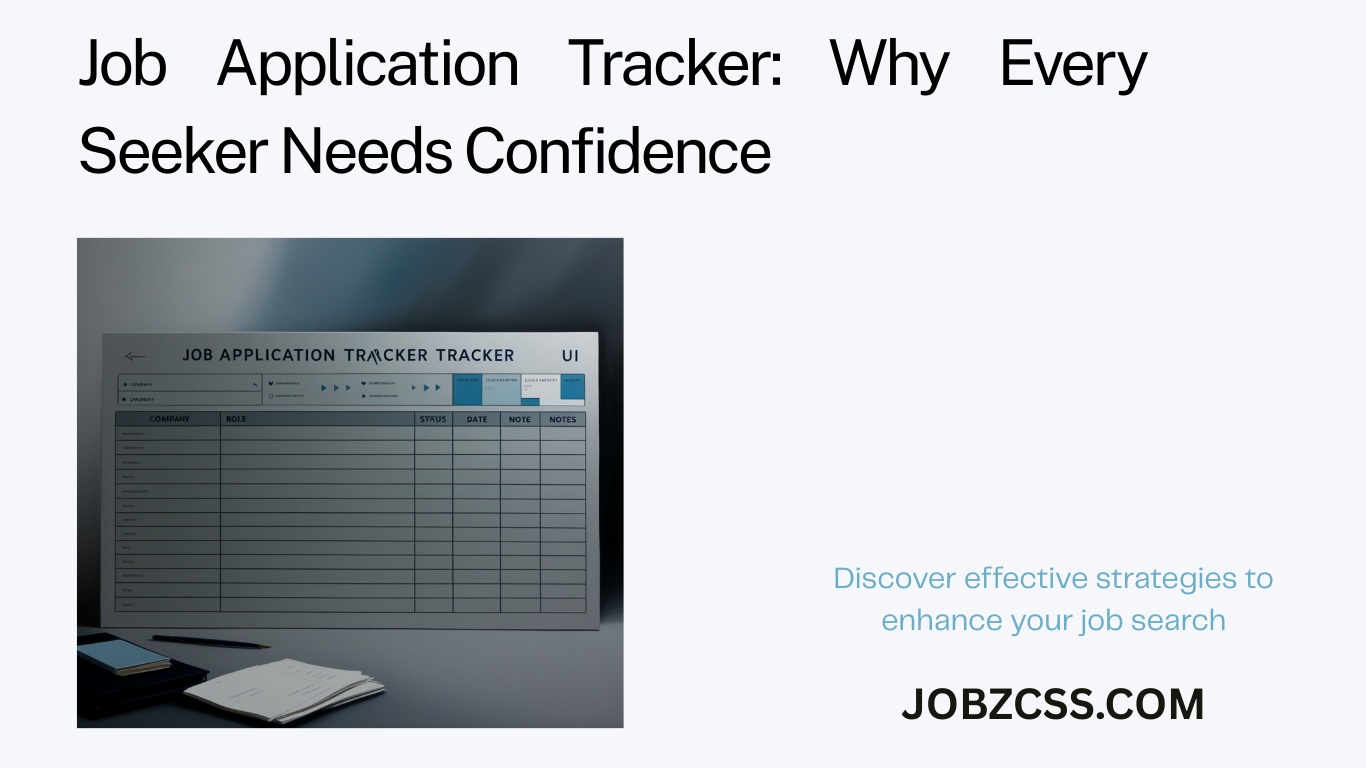
A job application tracker is a tool or system that helps you record, organize, and manage all your job applications in one place.
Instead of relying on memory or scattered emails, a tracker gives you a clear overview of:
- Where you’ve applied
- Application deadlines
- Interview stages
- Follow-up dates
- Recruiter contact details
It can be as simple as a spreadsheet or as advanced as a dedicated job tracking app. The goal is the same: stay organized and in control of your job search.
More Related article: https://jobzcss.com/linkedin-headline-examples/
Why a Job Application Tracker Is Essential Today
1. Employers Receive Hundreds of Applications
Recruiters often review applications using Applicant Tracking Systems (ATS). If you don’t follow up or tailor your resume, your application can disappear quickly. A tracker ensures nothing slips through the cracks.
2. Better Follow-Ups Mean Better Results
Following up at the right time shows professionalism and interest. Many candidates lose opportunities simply because they forget to follow up.
3. Reduced Job Search Stress
Job hunting can feel chaotic. A clear job search tracker brings structure, clarity, and confidence—something hiring managers can sense during interviews.
Key Benefits of Using a Job Application Tracker
- Keeps all job applications in one place
- Improves time management during job search
- Helps track interview progress and outcomes
- Makes follow-ups easy and timely
- Identifies patterns (what works and what doesn’t)
- Increases response and interview rates
From an efficiency and productivity perspective, it’s one of the highest ROI tools for job seekers.
What to Include in a Job Application Tracker
Essential Columns or Fields
If you’re creating your own tracker, include these core details:
- Company Name
- Job Title
- Job Location / Remote
- Application Date
- Application Status (Applied, Interview, Rejected, Offer)
- Recruiter or Hiring Manager
- Contact Email
- Follow-Up Date
- Interview Notes
- Salary Range
These fields help you manage your job applications like a professional pipeline.
How to Create a Job Application Tracker
Option 1: Spreadsheet (Most Popular)
A spreadsheet-based job application tracker is free, flexible, and easy to customize.
You can use:
- Google Sheets
- Excel
- LibreOffice
Why spreadsheets work well:
- Easy to update
- Cloud-based access
- Custom formulas and filters
- Ideal for tracking multiple job applications
Option 2: Notion or Digital Planners
For those who prefer visual organization, Notion-based job trackers offer dashboards, kanban boards, and reminders.
Option 3: Job Application Tracking Apps
Some platforms offer built-in job tracking features, but many job seekers still prefer manual tracking for privacy and control.
Best Practices for Using a Job Application Tracker
Update It Daily
Make it a habit to update your tracker every time you:
- Submit an application
- Receive a response
- Complete an interview
Consistency is key.
Color-Code Application Status
Using colors helps you quickly identify:
- Active applications
- Interview stages
- Offers and rejections
This improves clarity and saves time.
Set Follow-Up Reminders
A smart follow-up (5–10 business days after applying) can make a huge difference. Your tracker should clearly show when to follow up.
How a Job Application Tracker Improves Interview Success
Tracking interviews isn’t just about dates—it’s about preparation.
With proper notes, you can:
- Remember what each company discussed
- Avoid repeating mistakes
- Tailor answers for future interviews
- Track common interview questions
This level of preparation builds confidence and improves performance.
Common Mistakes to Avoid
1. Tracking Too Much Information
Keep it useful, not overwhelming. Focus on data that helps decision-making.
2. Forgetting to Update Status
An outdated tracker defeats its purpose. Make updates part of your routine.
3. Not Reviewing Patterns
Your tracker is also an analysis tool. Review it weekly to see:
- Which resumes get interviews
- Which industries respond faster
- Where you should focus next
Job Application Tracker for Remote and Freelance Jobs
Remote job seekers benefit even more from tracking because:
- Remote listings attract more competition
- Response times vary widely
- Scams are more common
A tracker helps you verify listings, track legitimate employers, and avoid duplicate applications.
Is a Job Application Tracker Worth It?
Absolutely.
From a career coaching perspective, candidates who use a structured job tracking system are:
- More organized
- More confident
- More likely to follow up
- More successful in landing interviews
It’s a small habit with a big impact.
Conclusion
A job application tracker is not just a tool—it’s a strategy. In today’s competitive job market, staying organized can be the difference between silence and success.
By tracking your applications, following up consistently, and reviewing your progress, you turn job searching into a focused, data-driven process instead of a guessing game.
If you haven’t started using a job application tracker yet, today is the perfect time. Create one, stay consistent, and take control of your job search.
FAQs
What is the best job application tracker?
The best tracker is one you use consistently. Spreadsheets are ideal for most job seekers due to flexibility and simplicity.
How many job applications should I track?
Track every application you submit. Even a small number can become confusing without proper organization.
Can a job application tracker improve interview chances?
Yes. It helps with follow-ups, interview preparation, and identifying what strategies work best.
Should I track rejected job applications?
Yes. Rejections provide valuable insights and help you refine your approach.
Is a job application tracker useful for fresh graduates?
Absolutely. It helps new job seekers stay organized and develop professional job search habits early.
60 seconds to Wait.